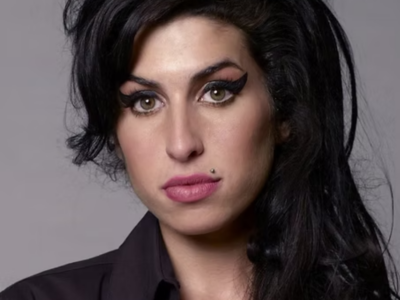
I Spoke to Amy Winehouse on the Night She Died: Dale Davis Recalls the Singer’s Final Hours
I Spoke to Amy Winehouse on the Night She Died: Dale Davis Recalls the Singer’s Final Hours
Amy Winehouse’s final night has remained one of the most haunting chapters in modern music history. Behind the headlines, photographs and years of public scrutiny was a deeply talented woman whose life had become a complicated mixture of extraordinary artistic success, personal struggles and a desperate search for peace.
Dale Davis, a musician and friend who had worked closely with Winehouse, later recalled speaking with her on the night she died.
His memories offer an intimate perspective on a moment that has since been surrounded by grief, speculation and countless attempts to understand what happened to the British singer.
Winehouse was only 27 when she died at her London home on July 23, 2011. Her death shocked fans around the world and brought an abrupt end to a career that had already transformed popular music.
Yet Davis’s recollection presents a more personal picture of the woman behind the famous voice. Rather than simply remembering the international superstar seen on magazine covers and concert stages, he remembered Amy as someone who could be funny, vulnerable, affectionate and hopeful.
According to Davis, Winehouse seemed to be moving toward a period in which happiness might finally have been possible.
That makes her death even more difficult to comprehend.
Amy Winehouse: A Voice That Changed Music
Amy Winehouse emerged from London with a voice that seemed to belong to another era.
Her distinctive combination of soul, jazz, R&B and contemporary songwriting quickly separated her from the crowded field of early-2000s pop artists.
Her debut album, Frank, introduced listeners to a young songwriter with an unusually mature perspective.
But it was her second album, Back to Black, that turned Winehouse into an international phenomenon.
Released in 2006, the record produced songs that became global hits and established her as one of Britain’s most important musical talents.
Her writing was unusually direct. Winehouse did not hide behind vague lyrics or carefully constructed pop personas.
She wrote about relationships, heartbreak, loneliness, drinking, regret and emotional confusion with a frankness that made listeners feel as though they were hearing private thoughts set to music.
The album’s success brought her major awards and international recognition.
It also brought an intense level of attention that Winehouse often struggled to manage.
The public became fascinated not only by her music but by her private life.
Her relationships, appearance, behavior and struggles were repeatedly discussed in newspapers and on television. Photographers followed her through London, while images of her became part of a relentless celebrity news cycle.

For a young woman who had already experienced enormous pressure, the attention could be overwhelming.
The Person Behind the Headlines
To understand Davis’s memories, it is important to separate Amy Winehouse the celebrity from Amy Winehouse the person.
Friends and musicians who knew her often described someone considerably more complicated than the caricature that appeared in the tabloids.
Winehouse could be extraordinarily generous. She could be playful and warm. She had an intense love of music and possessed an instinctive understanding of rhythm and melody that musicians around her recognized immediately.
Her voice was not manufactured by a record label. It was unmistakably hers.
But her extraordinary talent existed alongside periods of instability.
Winehouse’s personal struggles became increasingly visible during the years following Back to Black. Her relationship with Blake Fielder-Civil attracted enormous media attention, while her battles with substance misuse and alcohol became subjects of constant public discussion.
The distinction between concern and spectacle was often blurred.
For many people watching from outside, Winehouse’s difficulties became entertainment. For the people closest to her, they were painful realities involving a friend, daughter and colleague.
Davis belonged to that inner circle of musicians who had seen Winehouse away from the cameras.
His memories therefore carry a different weight.
The Night Amy Winehouse Died
On July 23, 2011, Winehouse was found dead at her home in Camden, North London.
The news spread rapidly.
Within hours, the world was talking about the singer who had died at 27, adding another tragic name to the mythology surrounding musicians who died at that age.
But behind the public mourning were people who had spoken with Winehouse shortly before her death.
Dale Davis was one of them.
His recollection of their final conversation has endured because it offers something that many accounts of Winehouse’s death lacked: a glimpse of her emotional state shortly before the tragedy.
Davis later described Winehouse as someone who appeared to have reasons for optimism.
She had experienced extraordinary highs and devastating lows, but there were signs that she was trying to move forward.
That possibility is central to the sadness surrounding her final days.
She was not simply a star whose story had been heading inevitably toward tragedy.
She was a person whose life contained possibilities that were never allowed to unfold.
“So Close to Finally Being Happy”
The idea that Winehouse was close to happiness is perhaps one of the most heartbreaking elements of Davis’s recollection.
By 2011, her life had already changed dramatically.
The intense relationship that had dominated much of her public story was no longer the same. Her professional future remained uncertain, but she was still capable of creating music and connecting with other musicians.
There were also indications that she wanted a different kind of life.
For someone who had spent years living under extraordinary scrutiny, happiness did not necessarily mean another number-one album or another award.
It could mean something much simpler.
Stability.
Friendship.
Family.
Music without pressure.
A life away from the cameras.
The ability to wake up without feeling that the entire world was waiting to judge the next thing she did.
Davis’s memory suggests that Winehouse had glimpses of that possibility.
And that makes the tragedy especially painful.
The Burden of Fame
Winehouse became famous during an era when celebrity culture was becoming increasingly aggressive.
Social media was still developing, but newspapers, celebrity websites, television programs and paparazzi photography created an environment in which famous people could be followed almost continuously.
Winehouse was particularly vulnerable to that attention because her struggles were visible.
Images of her appearing unwell could become front-page stories. Her relationships could become international news. Concert performances were scrutinized not only for their musical quality but for any sign that she might be struggling.
The result was a cruel contradiction.
The world wanted more of Amy Winehouse while simultaneously criticizing the consequences of the pressure placed upon her.
Her pain became part of her public identity.
Yet the person experiencing that pain remained human.
A Musician’s Perspective
Dale Davis was not simply an observer of Winehouse’s career. He was a musician who understood the environment in which she worked.
Musicians often form unusually close relationships because touring and recording require long periods of collaboration. They see one another during rehearsals, late-night sessions, travel and performances.
They also witness moments that fans never see.
A performer can walk onto a stage in front of thousands of people and appear completely confident, then return backstage and struggle privately.
Davis’s recollections are valuable because they remind audiences that Winehouse was more than the headlines.
She was a working musician.
She cared deeply about music.

She understood the emotional power of a song.
And she had relationships with people who knew her beyond the public image.
The Shadow of Addiction
Winehouse’s struggles with alcohol and drugs have been discussed extensively since her death.
However, any serious examination of her story must avoid reducing her life to addiction.
Addiction was part of her story, but it was not her entire identity.
She was a songwriter, vocalist, daughter, friend and collaborator. She was also a young woman attempting to navigate adulthood under conditions of extraordinary pressure.
The temptation to look backward and interpret every event as evidence that tragedy was inevitable can be misleading.
People struggling with addiction can recover.
People can change.
People can rebuild relationships.
People can experience periods of stability after years of chaos.
That is why memories of Winehouse appearing hopeful are so important.
They demonstrate that her final outcome was not necessarily the only outcome that could have occurred.
The Tragedy of the “27 Club”
Winehouse’s death immediately connected her to the so-called “27 Club,” a cultural phrase associated with musicians and artists who died at the age of 27.
The list includes several legendary figures from previous generations.
Winehouse’s inclusion in that group became another layer of mythology surrounding her death.
But mythology can sometimes obscure reality.
Winehouse did not die because she was destined to become part of a romanticized club of tragic artists.
She died because of circumstances surrounding her health and alcohol use.
The tragedy is not that she fulfilled a musical legend.
The tragedy is that a young woman with enormous talent died when she still had much of her life ahead of her.
A Career Cut Short
Winehouse’s career was still developing when she died.
Her achievements had already been remarkable, but she had only released two studio albums.
Frank had introduced her talent.
Back to Black established her internationally.
What might have followed remained unknown.
Would she have recorded another jazz-influenced album?
Would she have moved into production?
Would she have written for other artists?
Would she have explored different musical styles?
Would she have eventually stepped away from fame?
Nobody knows.
The unanswered questions are part of the legacy.
What Her Friends Remembered
For people who knew Winehouse personally, her death was not primarily about record sales or awards.
It was about losing Amy.
Friends remembered her humor, her intelligence and her ability to make people laugh.
Musicians remembered her extraordinary ear.
Those who worked with her remembered moments of creativity when songs seemed to come together almost effortlessly.
Her family remembered a daughter.
Her fans remembered a voice.
The media remembered a headline.
These different versions of Amy Winehouse existed simultaneously.
Davis’s memories help preserve the first of these: the private human being.
Why the Final Conversation Matters
Final conversations are powerful because they often become emotionally significant only after someone has died.
An ordinary phone call can suddenly become a treasured memory.
A casual goodbye can become the last goodbye.
A conversation that seemed insignificant at the time can later be replayed repeatedly in someone’s mind.
For Davis, his conversation with Winehouse on the night she died became part of that painful category.
He could not have known that it would be their final exchange.
Neither could the people around Winehouse have fully understood what was about to happen.
That is one of the cruelest aspects of sudden death.
There is rarely a clear dividing line between “before” and “after” until afterward.
The Amy Winehouse Fans Never Forgot
More than a decade after her death, Winehouse remains an influential figure.
Her music continues to attract new listeners.
Her songs remain widely recognized.
Her distinctive vocal style has influenced singers across generations.
Her image has become instantly recognizable, from her towering beehive hairstyle to her winged eyeliner and vintage-inspired clothing.
But perhaps her most enduring legacy is her songwriting.
Winehouse had the rare ability to transform personal experiences into songs that felt universal.
Listeners who had never experienced her level of fame could still understand the emotions in her music.
Heartbreak sounded like heartbreak.
Loneliness sounded like loneliness.
Love sounded complicated.
Regret sounded real.
That authenticity helped make her work timeless.
The Difference Between Fame and Happiness
Winehouse’s story also raises a broader question about celebrity culture.
What happens when success arrives faster than a person can emotionally process it?
Fame can provide money, opportunity and recognition.
It can also remove privacy.
For Winehouse, success brought opportunities that many aspiring musicians would have dreamed about. But it also intensified the scrutiny surrounding her personal struggles.
The public often assumes that enormous success should automatically produce happiness.
Winehouse’s life demonstrated otherwise.
A person can stand on the world’s biggest stages and still feel lost.
A person can win major awards and still struggle to find peace.
A person can have millions of fans and still experience profound loneliness.
The Woman Behind “Back to Black”
It is easy to remember Winehouse primarily through her most famous songs.
But doing so risks turning a complex human being into a soundtrack.
She was much more than Back to Black.
She was a young woman from London who loved soul music and jazz.
She was a songwriter who admired musicians from earlier generations.
She was someone who could become intensely passionate about the music she loved.
She also had flaws.
She made mistakes.
She struggled.
She sometimes hurt herself and others.
None of these facts cancel out the others.
A meaningful remembrance requires room for the contradictions.
The Lasting Impact of Her Death
Winehouse’s death had an impact far beyond the music industry.
It sparked conversations about addiction, celebrity culture, mental health, paparazzi intrusion and the responsibilities of people surrounding vulnerable performers.
The tragedy also changed the way many people thought about young celebrities whose personal difficulties became public entertainment.
There was growing recognition that documenting someone’s decline is not the same thing as helping them.
Winehouse’s story became a warning about what can happen when fame, addiction and relentless public attention collide.
But it should also be remembered as a story about talent.
Her musical accomplishments were not incidental.
They were extraordinary.
A Legacy Bigger Than the Tragedy
One of the greatest risks in remembering Amy Winehouse is allowing the circumstances of her death to overshadow everything she accomplished while alive.
Her Grammy-winning work remains central to modern British music.
Her voice continues to be studied and admired.
Her songwriting remains influential.
Her recordings continue to introduce younger audiences to the sound that made her unique.
And the people who knew her continue to remember the woman behind the legend.
That is where Davis’s recollection becomes particularly meaningful.
His memory is not simply another story about the death of a celebrity.
It is a reminder that Amy Winehouse had a future she never got to experience.
The Happiness That Never Came
Perhaps the most painful question is what might have happened if Winehouse had been given more time.
Could she have recovered?
Could she have found lasting stability?
Could she have returned to the studio?
Could she have built a quieter life?
Could she have fallen in love again?
Could she have become an older musician whose career evolved over decades?
There is no answer.
The future disappeared with her.
What remains are songs, photographs, memories and the testimony of those who knew her.
Dale Davis’s recollection of speaking with Winehouse on the night she died provides one small but deeply human window into that lost future.
He remembered someone who appeared close to finally finding happiness.
That sentence carries enormous emotional weight because it challenges the idea that Winehouse’s story was simply a predetermined tragedy.
She had struggles, but she also had hope.
She had setbacks, but she also had talent.
She had endured extraordinary pressure, yet there were still moments when she appeared capable of imagining something better.
Remembering Amy Winehouse as a Person
Amy Winehouse died at 27, but her story should not end with the number.
She should not be remembered only for her addiction.
She should not be remembered only for her troubled relationships.
She should not be remembered only for paparazzi photographs.
She should not be remembered only for the night she died.
She should be remembered for the music she created.
She should be remembered for the voice that could make a lyric sound painfully intimate.
She should be remembered for her humor, personality and friendships.
And she should be remembered as a young woman whose life contained possibilities that extended far beyond her final years.
Dale Davis’s recollection brings that humanity into focus.
On a night that would become one of the saddest moments in British music history, Winehouse was still Amy.
She was still talking.
Still thinking.
Still connecting with people.
Still, perhaps, hoping that life could become something different.
And that is ultimately why her death remains so difficult to accept.
The world did not lose merely a famous singer.
It lost a gifted young artist who had already given listeners music that would outlive her, while still having so much more life left to live.
Amy Winehouse’s Enduring Legacy
Today, Amy Winehouse remains one of the most recognizable and influential singers of her generation.
Her music continues to cross borders and generations.
New listeners discover Back to Black and Frank without necessarily knowing every detail of her private life. They hear the voice first.
And perhaps that is the most fitting legacy.
The music remains.
The songs remain.
The emotional honesty remains.
So do the memories of the people who knew her before she became a symbol.
Dale Davis’s recollection of that final night reminds us that history is often more complicated than a headline.
The headline says Amy Winehouse died at 27.
The fuller story says she was a daughter, friend, songwriter, musician and human being who experienced extraordinary success alongside profound struggles.
And, according to those who were close to her, she still had moments in which happiness seemed possible.
That is the Amy Winehouse worth remembering.
Not simply the troubled star.
Not simply the tragic icon.
But the woman behind the voice — talented, complicated, imperfect, vulnerable and, for a brief moment on her final night, perhaps closer than ever to believing that life could finally become happy.
Her story ended far too soon.
Her music did not.
And more than a decade after her death, that music continues to speak with the same honesty that made Amy Winehouse unforgettable.