Karen Carney Calls for Equal Sponsorship Distribution: Advocates for 50/50 Split Between Men’s and Women’s Football Teams
Karen Carney Calls for Equal Sponsorship Distribution: Advocates for 50/50 Split Between Men’s and Women’s Football Teams
In a bold move towards gender equality in sports funding, former England international Karen Carney has publicly championed the idea that sponsorship deals should be equally divided between men’s and women’s football teams.
Her stance has ignited a lively debate across the football community, sports industry, and among fans worldwide.
In recent years, the landscape of football has undergone significant changes, with women’s football gaining increasing visibility and support.
However, disparities in funding, sponsorship, and media coverage remain stark. Former professional footballer and renowned sports pundit Karen Carney has emerged as a vocal advocate for addressing these inequalities.
She proposes a radical rethinking of sponsorship distribution, calling for a 50/50 split between men’s and women’s teams.
This article explores Karen Carney’s vision, the current state of sponsorship in football, the importance of gender equality in sports funding, and the potential impact of such a policy shift on the future of football at all levels.
The Current State of Sponsorship in Football
Football, often dubbed “the beautiful game,” is also one of the most lucrative sports globally. Sponsorship deals are a major revenue stream for clubs, leagues, and national teams.
Traditionally, these sponsorship agreements have favored men’s teams, reflecting historical disparities in viewership, media coverage, and commercial interest.
According to industry reports, the majority of high-profile sponsorship deals are directed toward men’s football, with women’s teams receiving a fraction of the investment.
For example, top-tier men’s clubs often secure multi-million dollar sponsorship agreements, while women’s teams frequently struggle to attract comparable funding.
This imbalance perpetuates a cycle where women’s football remains underfunded, underpromoted, and undervalued, despite the growing popularity and talent in the women’s game.
Karen Carney’s Vision for Equal Sponsorship
Karen Carney, a former England international and one of the most respected voices in football, believes that achieving gender parity in sponsorship is essential for the sport’s growth and fairness. She argues that a 50/50 split would:
Promote equality and fairness: Ensuring that women’s football receives equitable financial support.
Accelerate development: Providing women’s teams with the resources needed to improve facilities, coaching, and player development.
Enhance visibility: Increasing media coverage and sponsorship exposure for women’s football, attracting more fans and young players.
Set a precedent: Encouraging other sports and industries to follow suit in promoting gender equality.
In her recent interviews and social media posts, Carney emphasized that sponsorship should not be a zero-sum game but rather an investment in the future of football as a whole.
The Rationale Behind a 50/50 Split
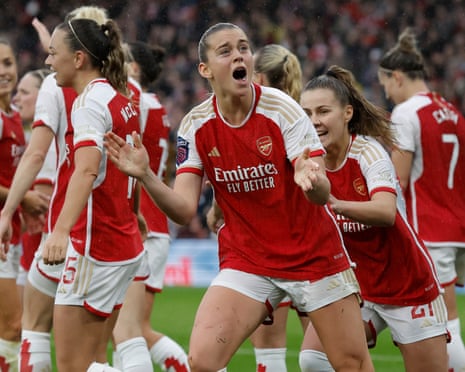
The idea of splitting sponsorship revenue equally stems from the belief that both men’s and women’s football have unique value and should be supported accordingly. Advocates argue that:
Equal investment leads to equal opportunity: Women’s teams can compete at higher levels and attract larger audiences when funded adequately.
Breaking down stereotypes: Financial parity challenges outdated notions that women’s sports are less exciting or commercially viable.
Long-term sustainability: Sustainable growth of women’s football depends on fair funding, which can lead to increased participation and talent development.
Moreover, proponents highlight that many women’s teams are already outperforming expectations in terms of engagement and viewership, demonstrating their potential to generate substantial sponsorship value.
Challenges and Criticisms
While Karen Carney’s proposal has garnered support, it also faces significant challenges:
Financial disparity: Currently, men’s football generates vastly higher revenue, making a 50/50 split complex in practice.
Commercial interests: Sponsors often prioritize high-profile men’s leagues, which attract larger audiences.
Structural changes required: Implementing such a split would require major shifts in league structures, sponsorship agreements, and media rights.
Critics argue that a sudden equal split might not be feasible without a gradual approach, and that other strategies—such as targeted investments and marketing—are necessary to elevate women’s football.
The Path Forward
Despite obstacles, many believe that the principle of equality should guide future policies. Some suggested steps include:
Creating dedicated sponsorship funds for women’s football.
Encouraging sponsors to commit to equitable branding opportunities.
Implementing policies that incentivize gender-balanced sponsorship deals.
Promoting media coverage of women’s football to increase its commercial appeal.
Karen Carney’s call for a 50/50 sponsorship split aims to catalyze these discussions and inspire action within the industry.
Conclusion
Karen Carney’s advocacy for splitting sponsorship deals equally between men’s and women’s football teams represents a bold step towards gender equality in sports funding.
While challenges remain, her vision underscores the importance of valuing women’s football on par with the men’s game, ensuring a more inclusive, diverse, and sustainable future for the sport.
As the world continues to champion equality and fairness, the question remains: can the football industry rise to the occasion and embrace a future where sponsorship and support are truly equitable?
Only time will tell, but Carney’s stance has undoubtedly sparked an essential conversation that could shape the future of football for generations to come.