
Analyzing Don Lemon’s Perspective on Journalism Credentials: A Deep Dive into the Debate Over Formal Training and Mainstream Media
In recent commentary that has sparked widespread discussion across social media platforms and professional circles alike, former CNN anchor Don Lemon has articulated a provocative stance on what constitutes a “real” journalist.
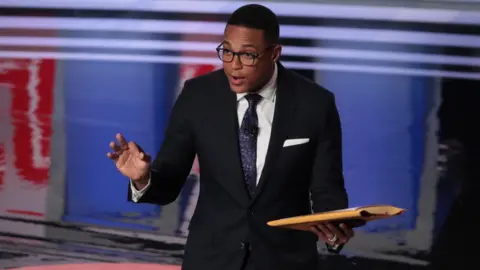
Lemon asserts that, in his view, an individual cannot truly be considered a journalist unless they possess formal training and are employed by a mainstream media organization.
This statement has ignited a debate about the nature of journalism in the digital age, the evolving landscape of media, and the criteria that define credibility and professionalism within the industry.
The Context of Don Lemon’s Statement
Don Lemon, a well-known figure in American journalism, has built a career spanning decades at CNN, one of the most prominent mainstream media outlets.
His experience and reputation have positioned him as an influential voice in discussions about journalism standards, ethics, and the future of news reporting.
When Lemon made his assertion—that genuine journalism requires formal training and employment within a mainstream media company—it was likely rooted in his perspective shaped by traditional journalistic standards.

Lemon’s comments come at a time when the media landscape is undergoing rapid transformation.
The proliferation of digital platforms, social media, independent journalism, and citizen reporting has democratized information dissemination, allowing almost anyone with internet access to share news and opinions.
While this democratization has expanded voices and increased access to information, it has also raised questions about the quality, accuracy, and professionalism of the content being produced.
Defining a “Real” Journalist: Traditional Views Versus Modern Realities
Historically, the profession of journalism has been associated with certain formal qualifications.
These include obtaining a degree in journalism or a related field, completing internships, and adhering to ethical standards set by professional organizations.
Employment within reputable media organizations—newspapers, television networks, radio stations—has often been viewed as a hallmark of legitimacy.
In this traditional framework, journalists are expected to undergo rigorous training in research methods, fact-checking, ethical reporting, and legal considerations.
They are also typically bound by codes of conduct that emphasize accuracy, fairness, and independence.
The assumption has been that these standards ensure the credibility and reliability of the information presented to the public.
However, in recent years, the landscape has shifted. The rise of digital media has blurred the lines between professional journalists and amateur content creators.
Many individuals without formal journalism education have gained large followings and influence, often producing high-quality, impactful journalism. Conversely, some credentialed journalists have faced criticism for bias, sensationalism, or inaccuracies.
The Role of Formal Training in Journalism
Formal training in journalism provides a foundational understanding of the principles and practices essential to responsible reporting. It typically covers topics such as:
Research and Investigation: Techniques for gathering accurate information and verifying sources.
Ethics and Responsibility: Principles that guide truthful, fair, and unbiased reporting.
Legal Considerations: Understanding libel, defamation, and privacy laws.
Writing and Storytelling: Crafting clear, compelling narratives.
Media Law and Policy: Navigating regulations affecting journalism.
Proponents of formal training argue that these elements are crucial for maintaining public trust and ensuring that news organizations fulfill their societal role responsibly.
They contend that without such training, individuals may lack the necessary skills to discern fact from fiction, leading to misinformation and erosion of journalistic integrity.
Mainstream Media and Its Significance
Employment within a mainstream media organization—such as CNN, The New York Times, BBC, or other established outlets—has historically been associated with credibility.
These organizations often have rigorous editorial processes, fact-checking procedures, and adherence to journalistic standards that help maintain their reputation.
Mainstream media companies also provide resources, training, and a platform for journalists to develop their skills and uphold accountability.
For many audiences, the association with a reputable media outlet serves as a signal of trustworthiness.
However, critics argue that mainstream media is not infallible. Bias, sensationalism, corporate interests, and political influence can sometimes compromise objectivity.
Moreover, the concentration of media ownership raises concerns about diversity of perspectives and the potential for monopolization of information.
The Rise of Citizen Journalism and Digital Media
Contrasting sharply with the traditional view are the many examples of citizen journalists—individuals who produce news content independently, often via social media platforms like Twitter, Facebook, YouTube, and TikTok.
These content creators may lack formal training or employment within a media organization but can have significant influence, especially during breaking news events or social movements.
Citizen journalism has played a pivotal role in covering stories that mainstream outlets may overlook or suppress.
For instance, during protests, natural disasters, or political upheavals, ordinary individuals with smartphones have provided real-time footage, eyewitness accounts, and grassroots perspectives.
This phenomenon has democratized news production, allowing diverse voices to be heard.
Yet, it also raises concerns about accuracy, bias, and accountability. Without institutional oversight, misinformation can spread rapidly, leading to confusion and polarization.
The Implications of Don Lemon’s Statement
Don Lemon’s assertion that only those with formal training and mainstream media employment are “real” journalists can be interpreted as a defense of traditional standards.
He may believe that the complexity and societal importance of journalism demand a certain level of expertise and institutional backing.
Conversely, critics might argue that Lemon’s stance dismisses the valuable contributions of independent journalists, bloggers, and social media influencers who, despite lacking formal credentials, fulfill vital roles in informing the public and holding power to account.
This debate touches on fundamental questions:
What are the core qualities that define a journalist?
Is formal education a necessary prerequisite, or can experience and dedication suffice?
Should the credibility of journalism be determined by institutional affiliation, or by the accuracy and impact of the content?
How do we balance the need for professional standards with the democratization of information?
The Future of Journalism: A Hybrid Model?

As the media ecosystem continues to evolve, many experts advocate for a hybrid approach—recognizing the importance of both professional training and the diverse contributions of citizen journalists.
Some suggest that traditional journalism institutions should adapt by incorporating digital literacy, social media skills, and community engagement into their training programs.
At the same time, independent content creators can benefit from ethical guidelines and fact-checking resources to enhance their credibility.
Technological innovations, such as fact-checking algorithms, AI-driven verification tools, and decentralized publishing platforms, hold promise for improving the quality and trustworthiness of information across the board.
Rethinking the Definition of a “Real” Journalist
Don Lemon’s comments have reignited a vital conversation about what it means to be a journalist in the 21st century.
While traditional standards emphasizing formal training and mainstream employment have historically underpinned notions of credibility, the digital age demands a broader perspective.
Ultimately, the essence of journalism lies in a commitment to truth, accuracy, fairness, and accountability—values that can be upheld by both credentialed professionals and dedicated amateurs.
As the industry navigates this complex landscape, fostering a culture of ethical responsibility, continuous learning, and open dialogue will be essential to ensuring that journalism continues to serve its vital role in society.
News

Caitlin Clark Breaks Silence Amid Mounting Criticism: “What’s Happening to Me Is a Crime Against Basketball”
Caitlin Clark Breaks Silence Amid Mounting Criticism: “What’s Happening to Me Is a Crime Against Basketball” In the world of…

Lili Reinhart: A Deep Dive into Her Roots, Career, and Gratitude for “Riverdale”
Lili Reinhart: A Deep Dive into Her Roots, Career, and Gratitude for “Riverdale” Lili Reinhart, a prominent figure in contemporary…
Ken Jennings Shocks the World with Unexpected Political Announcement, Ending 60 Years of Neutrality
Ken Jennings just lit a match and walked away—leaving Jeopardy! fans stunned, furious, and demanding answers. The one thing he was NEVER…

Savannah Guthrie’s Heart-Wrenching Words Shock Fans and Colleagues Alike: An In-Depth Look at Her Emotional Moment on Live TV
Savannah Guthrie completely BROKE DOWN on live television, sobbing uncontrollably as she uttered the words no one was prepared to…

Sandro Tonali: The Hidden Target That Could Have Changed Manchester United’s Summer Transfer Strategy
Sandro Tonali: The Hidden Target That Could Have Changed Manchester United’s Summer Transfer Strategy In the ever-evolving landscape of football,…
Celine Dion Announces Highly Anticipated Return to the Stage After Battling Rare Neurological Disorder
Celine Dion Announces Highly Anticipated Return to the Stage After Battling Rare Neurological Disorder Paris, France — In a momentous…
End of content
No more pages to load