Toni Kroos Opens Up About Retirement: A Reflection on Passion, Physical Well-being, and a Career Defined by Excellence
In a candid interview, the legendary German midfielder Toni Kroos revealed the heartfelt reasons behind his decision to retire from professional football.
Kroos, renowned for his exceptional passing, tactical intelligence, and calm demeanor on the pitch, shared insights into his journey, emphasizing that his retirement was driven by a desire to preserve his physical and mental health rather than a lack of passion for the game.
The Man Behind the Midfield Maestro

Toni Kroos, born on January 4, 1990, in Greifswald, Germany, has established himself as one of the most technically gifted midfielders of his generation.
His career spans top European clubs such as Bayern Munich and Real Madrid, where he played pivotal roles in numerous domestic and international successes, including multiple UEFA Champions League titles.
Kroos’s playing style is characterized by his exceptional vision, precise passing, and ability to control the tempo of the game.
His calmness under pressure and strategic understanding of football have earned him admiration across the football community and made him a key figure in Germany’s national team.
The Decision to Retire: A Personal Reflection
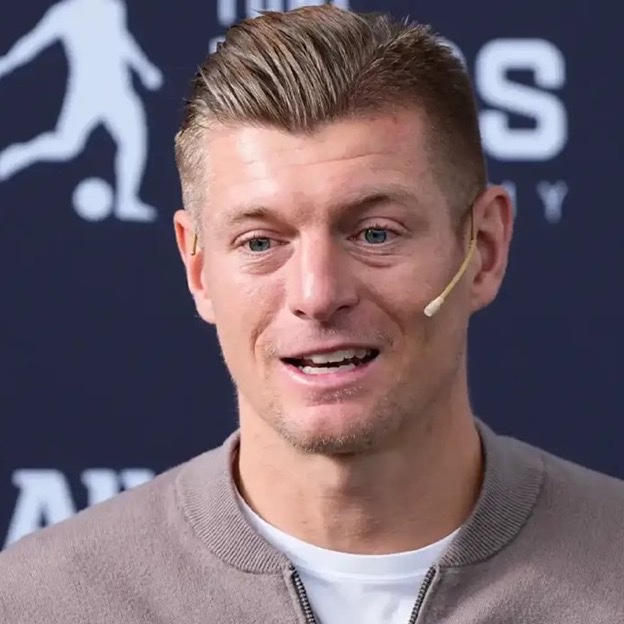
In an exclusive interview, Kroos explained that his decision to retire was not influenced by declining performance or loss of motivation but by a conscious choice to prioritize his health and well-being.
“I retired because I never wanted to reach the point where I didn’t feel well and started having physical problems,” Kroos stated.
He elaborated that as a professional athlete, the physical toll of the sport is immense.
The rigorous training, constant travel, and high-pressure matches can take a significant toll on the body and mind over time.
For Kroos, it was essential to recognize his limits and make a decision that aligns with his long-term health.
The Importance of Physical and Mental Well-being in Football

Kroos’s openness about his health highlights an increasingly important conversation within professional sports: the need to prioritize athlete well-being.
While the glamour of football often emphasizes trophies, records, and fame, the reality of a career in elite sports involves physical strain, injuries, and mental stress.
Throughout his career, Kroos managed these challenges with professionalism and resilience. His approach to training, recovery, and mental health set an example for aspiring athletes.
His decision to retire before facing serious health issues underscores the importance of self-awareness and proactive health management.
The Passion for the Game Remains Intact
Despite stepping away from professional football, Kroos’s passion for the sport remains unwavering. He has often spoken about his love for football and the joy it brings him.
His decision to retire was not driven by a loss of love for the game but by a desire to leave at a point where he still felt fulfilled and healthy.
Kroos’s career is a testament to dedication, discipline, and love for football. His influence extends beyond his technical skills; he has inspired countless young players to pursue their dreams with integrity and perseverance.
Legacy and Impact
Toni Kroos’s legacy in football is secure. His contributions to both club and country have left a lasting imprint.
His role in Real Madrid’s dominance during the 2010s, his leadership in Germany’s national team, and his influence on the modern midfielder position have cemented his status as one of the greats.
Moreover, Kroos’s openness about health and retirement sets a precedent for future generations.
It encourages athletes to listen to their bodies and prioritize their health over external pressures or societal expectations.
A Look Ahead: What’s Next for Toni Kroos?
Retirement marks a new chapter for Kroos. While he may step away from the pitch, his journey in football is far from over.
Many expect him to transition into coaching, punditry, or other roles within the sport, where he can share his knowledge and experience.
Additionally, Kroos’s focus on personal health and family life suggests that his future endeavors will be balanced with his well-being at the forefront.
His story serves as an inspiring reminder that success in sports is not solely defined by trophies but also by the integrity and self-awareness of the athlete.
Final Thoughts
Toni Kroos’s decision to retire is a poignant reminder of the human side of professional sports. Behind the headlines and highlight reels lies a person who understands the importance of health, passion, and self-respect.
His candid reflection on his career and reasons for stepping away from the game resonate with fans and fellow athletes alike.
As the football world bids farewell to one of its most elegant midfielders, Kroos’s legacy extends beyond the pitch.
It embodies the values of dedication, resilience, and self-care—lessons that will inspire generations to come.
News
Cleveland Browns Trade Myles Garrett to Los Angeles Rams: A Deep Dive into the NFL’s Latest blockbuster move
Cleveland Browns Trade Myles Garrett to Los Angeles Rams: A Deep Dive into the NFL’s Latest blockbuster move In a…

“Beauty in Black 3” Set to Return for Final Season: Tyler Perry Brings the Iconic Drama to a Close on Netflix
“Beauty in Black 3” Set to Return for Final Season: Tyler Perry Brings the Iconic Drama to a Close on…

Rising NBA Star AJ Dybantsa Eyes Trae Young’s Number 3 Jersey as Potential Washington Wizards Move Looms
Rising NBA Star AJ Dybantsa Eyes Trae Young’s Number 3 Jersey as Potential Washington Wizards Move Looms In the dynamic…
Keanu Reeves and Alexandra Grant Shine Bright at the MOCA Gala: A Night of Love, Elegance, and Artistic Elegance
Keanu Reeves and Alexandra Grant Shine Bright at the MOCA Gala: A Night of Love, Elegance, and Artistic Elegance An…
Senne Lammens: The Premier League’s Defensive Wall of the 2025/26 Season
Senne Lammens: The Premier League’s Defensive Wall of the 2025/26 Season In the high-stakes world of professional football, goalkeepers often…
Pamela Anderson Breaks Silence on Rumored Romance with Liam Neeson: An In-Depth Look at Their Relationship and Public Perceptions
Pamela Anderson Breaks Silence on Rumored Romance with Liam Neeson: An In-Depth Look at Their Relationship and Public Perceptions In…
End of content
No more pages to load